24Sep
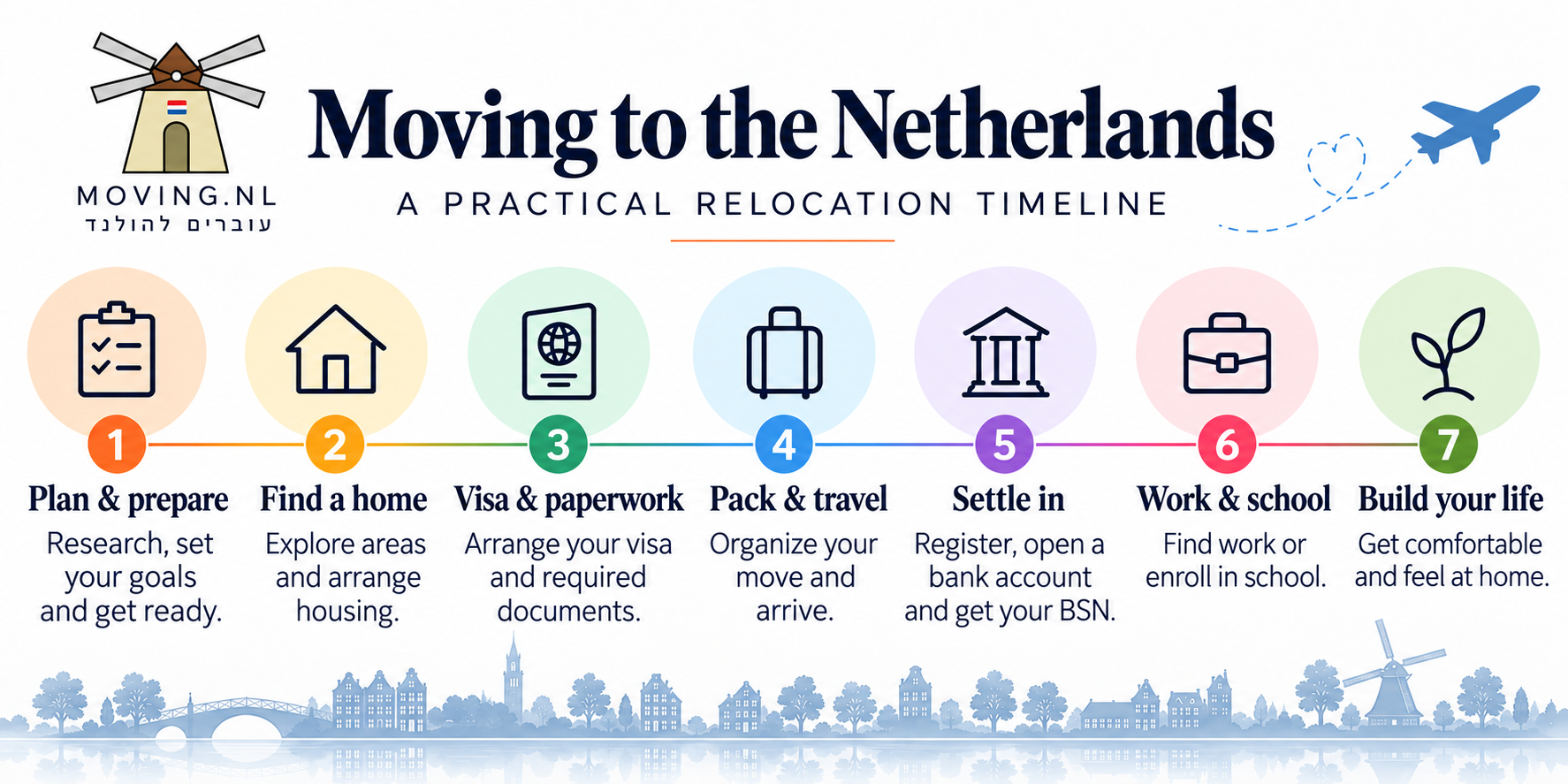
Moving to the Netherlands is exciting, but the easiest relocations usually start long before the moving day. Whether you are relocating for work, moving with your family, joining a partner or starting a new chapter, having a clear timeline can make the whole process feel much more manageable. The good news?
You don't have to do everything at once.
Housing, work, immigration, schools, and paperwork can often move forward at the same time. Here is a realistic timeline for moving to the Netherlands and settling into life here.
📅 Around 12 months before - Start planning
This is the stage where an idea starts becoming a real plan. Start looking at the practical side of your move: your immigration or residence route, the documents you may need, where you would like to live and what the job and housing markets look like.If you are moving with children, this is also the right time to explore schools and childcare.
Considering an international school? Start early.
Some international schools have limited availability or waiting lists, so it is worth checking your options well in advance.
Dutch public schools are different. Registration is generally not something you need to arrange a year ahead, and the process depends on the municipality, the child's age and available places.
More about the Dutch education system here: https://www.movingnl.com/articles/the-dutch-education-system
🏠 6-9 months before - Find your place
Now it is time to move from research to action.
Start exploring the Dutch housing market and the neighbourhoods that could suit your lifestyle. Think beyond the property itself: commuting, schools, public transport, local amenities and the general feel of the area can all make a big difference to your experience. If you are still looking for work, this is also a good time to start or intensify your job search in the Netherlands.
For many people, housing and employment are closely connected, so it makes sense to work on both at the same time.
📋 3-6 months before - Bring the pieces together
By this stage, your move should start feeling much more concrete. You may be finalising your accommodation, progressing with your residence or immigration process, moving forward with employment and arranging your children's school or childcare. This is also a good time to prepare the documents you will need in the Netherlands and start organising your move.
Don't wait for one task to be completely finished before starting the next. A successful relocation is usually a series of processes happening alongside each other.
✈️ One month before - Get ready to go
The final month is about turning plans into reality.
Your accommodation, travel arrangements and moving logistics should now be coming together. Make sure you have your important documents easily accessible and keep both digital and physical copies of anything you may need during the move. It is also worth preparing for your first few weeks in the Netherlands, when there will be quite a few practical things to arrange.
🇳🇱 Your first week - Welcome to the Netherlands
If you are going to live in the Netherlands for more than four months, you generally need to register with the municipality where you live within five days of arrival.
Your registration is recorded in the BRP (Personal Records Database) and you will receive your BSN (citizen service number). Your BSN is used for many interactions with the Dutch government, healthcare and other services. Once you have your registration and BSN, you can also arrange your DigiD, which is used to access many Dutch government services.
This is often when the relocation starts to feel real: you are no longer just preparing to move. You are starting to build your life here.
🏦 The first few weeks - Start settling in
Now come the practical things that make everyday life work.
You can arrange your Dutch bank account, health insurance and GP, complete school or childcare arrangements and set up services such as internet and utilities.
Dutch health insurance is compulsory for people who are required to have it, and if you come to live or work in the Netherlands, you should arrange it as soon as possible and no later than four months after arrival.
Registering with a GP (huisarts) is not legally mandatory, but it is recommended so you have access to local primary healthcare when you need it. You can also look into benefits or allowances you may be entitled to, depending on your circumstances.
🏡 The first few months - From relocating to living
Getting your BSN, finding a home and opening a bank account are important milestones, but they are not the end of the journey. The first few months are about finding your rhythm: getting comfortable in your neighbourhood, settling into work or school, discovering local services and understanding how everyday life works in the Netherlands.
Moving to the Netherlands isn't just about changing countries. It's about creating a new home and a new routine.
Need help with your move to the Netherlands?
Every relocation is different. A single professional moving for a new job will have very different needs from a family with children or someone moving to join a partner.
Hi, I'm Moran. I have lived in the Netherlands for 13 years. At MovingNL, I provide personalised relocation support for people moving to the Netherlands from around the world.
This can include:
Personal relocation planning and consultation - understanding your situation, priorities and timeline and creating a practical plan for your move.
Landing and settling-in packages - tailored support for individuals, families and international professionals during the first stages of life in the Netherlands.
Neighbourhood tours - explore different areas with someone who understands the Dutch housing market and help find the location that fits your lifestyle.
Property and rental assistance - support with finding a suitable home and navigating the Dutch property market.
Practical relocation support - assistance with Dutch bureaucracy, registrations, schools and the many practical details involved in settling into a new country. You don't have to figure everything out on your own.
With the right planning and local guidance, the move can be much clearer, more organised and less overwhelming.
MovingNL - practical relocation support for a smoother start in the Netherlands.
Comments